

Article by Amy Paige Condon
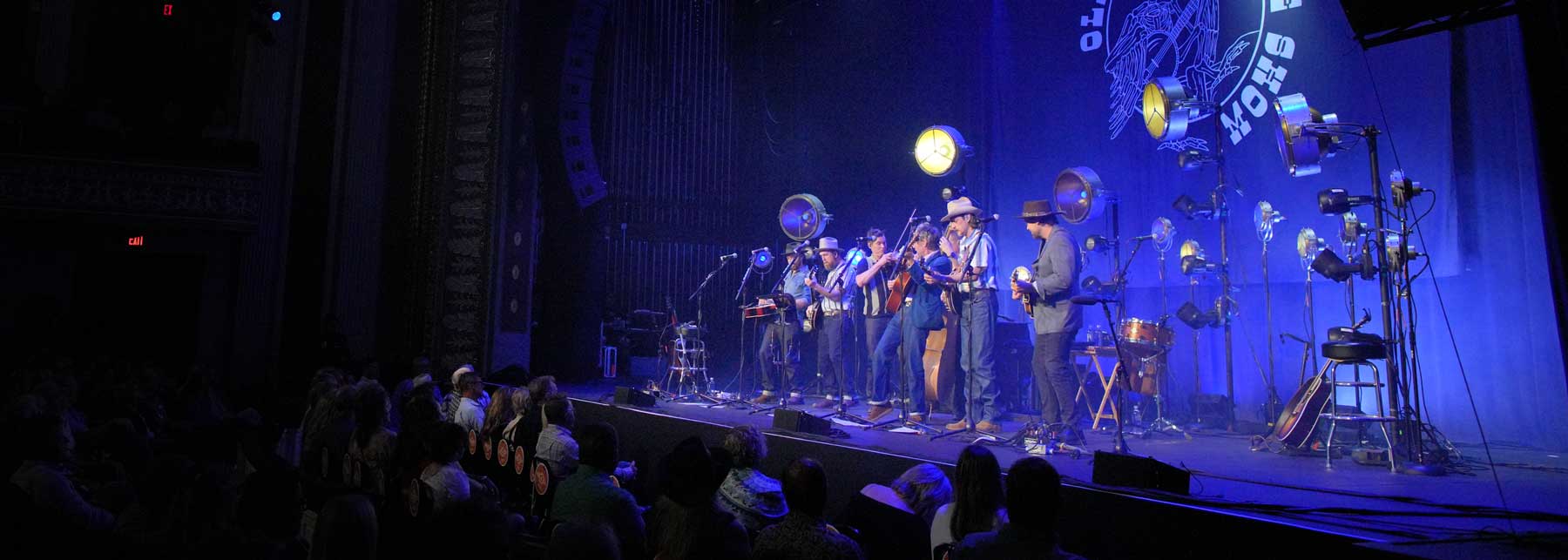
On Feb. 28, 2026, the Grand Ole Opry in Nashville, Tenn., celebrated the 25th anniversary of the Coen Brothers’ O, Brother, Where Art Thou?—a film credited with reviving American roots music with a T Bone Burnett-produced soundtrack that reached way back into the annals of bluegrass and gospel. Sharing the Opry stage that night were two acts—multi-instrumentalist Dan Tyminski and Old Crow Medicine Show whose lives were changed forever by the movie and album, which sold more than 8 million copies.
“O, Brother” made Tyminski, then a sideman in the venerated bluegrass and country band Alison Krauss and Union Station, a household name as the “Man of Constant Sorrow” behind George Clooney’s singing voice.
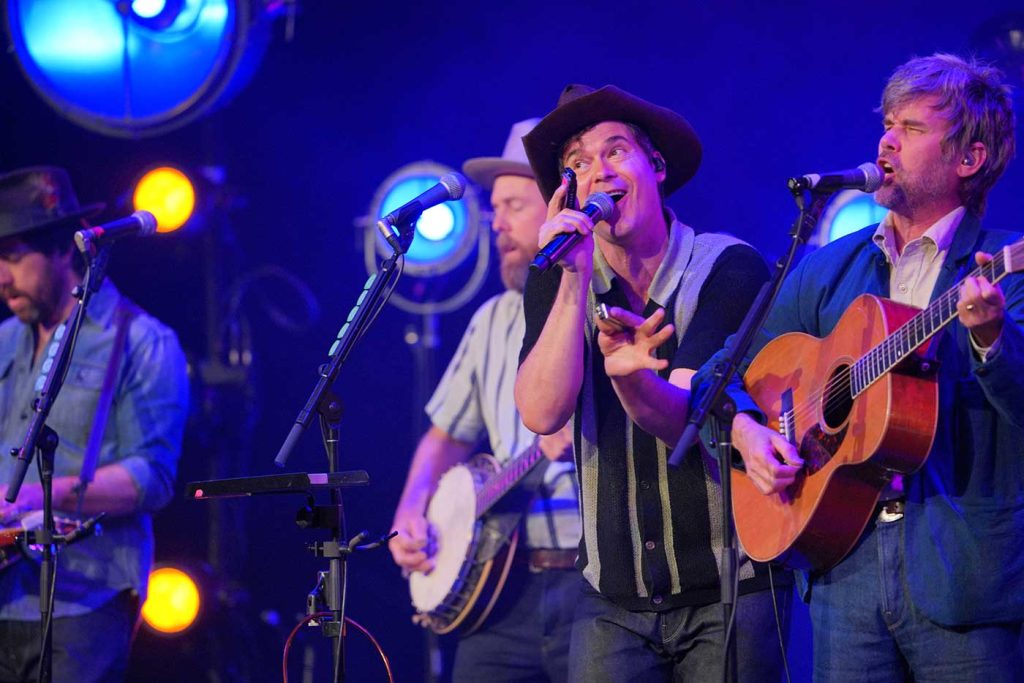
“My life is nowhere near the same without that having happened to me. That was the game changer,” Tyminski recalls.
For Ketch Secor, then a 23-year-old banjo player and fiddler with a nascent band busking on street corners and hitting the bluegrass festival circuit, the soundtrack’s success was a runway.
“When we were first getting started, so many people would say, ‘look, it’s the Soggy Bottom Boys.’ It was a really beautiful time in which the consciousness of America was being reopened to this mesmerizing flow of American traditional music.”
As an authentic string band with a contagious kinetic energy on stage reminiscent of a tent revival, Old Crow Medicine Show soared afterward by tapping into that yearning for “something old and genuine,” says Secor.
“When you play fiddles and banjos, there’s a kind of cyclic round that happens in our arts and humanities, by which every couple of generations, young people want to know what the past was like. I’m of a generation like that… even in the ’90s, I felt like we were losing track of the things that make us American, the things that are cultural epitomes of our people, of our great land.”
Now at the quarter century mark with a lot of road, life and music behind them, Old Crow Medicine Show is making music with a nod to the familiar. The band’s new world tour harkens back to their earlier days, by focusing on the songs and sounds of O.C.M.S and Big Iron World, their first two studio albums.
“Every concert is an opening of the proverbial case again, which puts you in that place of who will discover us tonight? What would they see when they encounter us?” Secor talks about a street preacher he saw as a kid. “That guy was scary but I couldn’t look away. I’ve tried do be the same kind of entertainer—somebody who has an intensity that makes you not want to look away and makes you think about yourself. What part of you has that fire?
“There’s a kindling that happens with American music traditions,” Secor adds. “You’re supposed to cup the flame and hand it to somebody else so that they can ignite their own.”
Tyminski has rekindled that fire that first fed his desire to play music in recent years by stepping away from the sidelines to be the front man in his own band. After more than 25 years with Union Station, Tyminski pursued solo projects when the band went on a touring hiatus in 2015.
“I didn’t play music for a while, and I started really jonesing for it. I questioned how long it would be if we were
going to come back. I really didn’t know.”
After a few years, he put the Dan Tyminski Band together and started traveling, playing his own music for the first time. He says he realized he had been other versions of himself when he played with his brother, the Lonesome River Band and with Alison Krauss and Union Station throughout his career. “But after I started writing my own music, performing my own songs, I felt like, for the first time in my life, I was my own version of Dan Tyminski.”
After a few band changes, he says, the music just kept getting better. “I kind of had this new vigor to go and play. It’s hard to explain when you’re my age and you’ve been playing for that many years to have a new kind of feeling.”
That feeling has forged deeper connections with audiences that he could not have created as a side man.
“Make no mistake, I loved what I did with Union Station. It was the most amazing experience of a lifetime that you could ever want. But, if I’m honest with myself, I wasn’t connecting to the audience in the way that I now get to talk to the people. It’s just an entirely different job… I want my show to feel like [the audience] is getting to actually know who I am, that there is a relationship being formed.”